Thursday, July 10, 2008

Angkor Wat's Architecture

by Chong Su Lyn


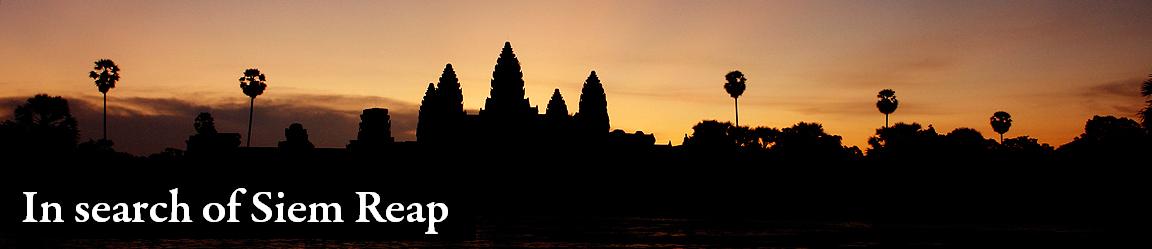
It was not even the break of dawn and all 18 students from Monash who came to Siem Reap were geared up and ready to roar their way to Angkor Wat. It is said that the most magnificent view of Angkor Wat is during the sunrise. The particular image of the bright orange sun rising behind the Angkor Wat towers and painting the skies with a tinge of blue-ish purple splendor is worth the early wake up call.

Angkor Wat or loosely translated as the 'The Pagoda of the City' has a very deep history that spans throughout the early 12th century. The temple was constructed during the reign of King Suryavarman II in order to pay respect to the Hindu Gods. In the brief 37 years during the King's reign, he made a relic that is recognized as one of the world's most famous architectural amazement until today. In the 21st century, Angkor Wat is known as the largest temple in the world. It is a masterpiece of ancient Khmer culture and is influenced by Indian architecture which can never be replicated. This precious gem is a treasure truly to behold.

Angkor Wat in all its majesty.

Angkor Wat is a gigantic three-tiered pyramid. It is creatively crowned by five lotus-like towers rising 65 meters from ground level. Surrounding the Wat itself is a moat which is 4 miles in length and 600 feet in width while the exterior wall measures 1300 meters x 1500 meters. The magnificent architecture itself is 1 km square and consists of three levels surmounted by a central tower. It is said that the Angkor Wat actually symbolizes the Mountain Meru – the home of Gods where the central quincunx of five towers is supposedly to represent the five peaks of the mountain. While the outer wall and the moat subsequently represents the end of the world as well as the ocean that surrounds it.

What makes this temple stand apart from the other temples throughout the world is the architectural significance in which the temple is constructed facing the West instead of the East. It is a unique blend of the temple mountain – the standard design for the Angkor empire's state temples, and influences from Orissa and the Chola of Tamil Nadu, India. Further evidence to this specialty is the display of bas-reliefs that lines the north, south, east and west walls – which proceed in a counter-clockwise direction. Also known as the prasavya in Hindu terminology as this is the reverse of the normal order.

The main building materials used to construct Angkor Wat are sandstones rather than brick or laterite. Most of the visible areas are made of sandstone blocks while laterite was still used to build the outer walls and also the hidden structural parts. We were informed and also observed that this is because the sandstone blocks less porous than laterite blocks and much more able to withstand the ravages of time.

Angkor Wat consists of half galleries that broaden passageways, while there are axial galleries that connect each enclosure to another. There is also a terrace present along the main axis where carvings of dertas and apsaras are clearly featured. There are also narrative scenes on the 'pendiments' such as the mythological Battle of Kuru on the west wall - the historical march of the army of Suryavarman II, scenes from Heaven and Hell on the south wall and last but not least, the classic 'Churning of the Ocean Milk' on the east wall. The temple interior is not densely carved but still sports hundreds of fine carvings of Apsaras and scenes from Hindu mythology. The center tower, on the third level on the other hand, houses four Buddha images. Each of these Buddha images faces different cardinal points highlighting intensely that Angkor Wat was constructed as a Hindu temple.

You can find these Apsara carvings round every corner.

In the first enclosure of Angkor Wat, a series of four rooms arranged in cruciform formation is apparent. These rooms feature sunken floors and continuous galleries. While the inner enclosure rests on an 11 meter tall two-tiered pyramid. It features a really steep staircase leading up to the enclosure. It also houses a continuous galleries in upper encases which is also aligned in a four room cruciform formation. The five tiers that is clearly apparent from outside juts out from these upper tiers. These cruciform houses used to house lots of shrines.

It might not have made it into the list of the New Seven Wonders of the World, but it certainly has made a great impression and impact on culture in and around Asia. I feel that it is a major attraction in Siem Reap, as well as a big money maker for the government of Cambodia, clearly has not lessen any of its' religious significance. People from around the world still do come over in search of peace and tranquility said to be found in Angkor Wat. But for the 18 students of Monash University, Malaysia, we came in search of Siem Reap and what we got in return was a great and wonderful experience never to be forgotten in the magical land of Angkor Wat.

(Ed.: The New Seven Wonders of the World was declared on the 7th of July, 2007 in Lisbon after a 'global' election took place online. Angkor Wat didn't make it but it was a finalist.)

Angkor Temples and the Bas-Reliefs

by Fabian Klavert


When entering any temples within the Angkor complex in Siem Reap, aside from the mesmerizing architecture, the first things you would notice are the intricate details of the stone carved murals. Each uniquely hand carved during different reigns of Angkor kings, the bas-reliefs often suits the purpose of serving religious beliefs, validating these historical landmarks as a successful outlet for religious expression.


Although the walls have stood still for countless centuries, stories written in stones within these hand carved murals have lived on to tell the tales of ancient Angkor civilization, uncovering historic events, cultural beliefs, and important figures which nowadays still fascinate archeologists, historians, and even tourists.

The most famous of them all, the Angkor Wat was built in early 12th century by King Suryavarman II as the state's temple and capital city. Separated by three different tiers and enclosed in a man made moat, each level and wings of the temple distinctively depicts various Hindu mythologies as a dedication to the Hindu gods, particularly Vishnu.

From the battle of the gods to the famous 'Churning of the Ocean Milk' in the east gallery, a uniform motif bounding these epic tales are the Apsaras. A Hindu mythological creature said to have been released due to the churning of the ocean milk to acquire an elixir of immortality, these celestial figures are scattered throughout Angkor Wat and all temples in Angkor.

Depicted as proficient dancers, each of Angkor Wat's apsaras are unique. With around 1700 figures lovingly hand carved, the elaborate headwear, jewelry, body posture and facial expressions define each one, whether they appear in duet, trios or solo. The dance offered to the Gods by apsaras have transformed into the Khmer traditional dance and one of Cambodia's main attraction.


While Angkor Wat focused on the depictions of aspects of Hinduism, Bayon temple, located at the heart of Angkor Thom, approximately 1500 meters from the south gate. Built by Jayavarman VII in the late 12th to early 13th century, the temple's bas-reliefs are dominated by the influence of Buddhism. The Bayon is broken down into three different section: the outer gallery, the inner gallery, and the upper terrace.

The outer gallery depicts the everyday lifestyle of the Angkor civilization in addition to historic events. This includes but are not limited to market and trading scenes, cockfights, festivals, and scenes with battles and processions. Each stone panel weaves a complicated tale of history and mythology. Figures within the outer gallery are easier to decipher due to its simplicity.

Personally, I feel that a quick research on historical knowledge of Buddhist and Hindu mythologies is recommended to understand bas-reliefs in the inner gallery, before you visit Angkor Wat. The inner gallery portrays similar mythologies as Angkor Wat's, with one being the Churning of The Ocean Milk located in the north of the western gapura.

On the other hand, the upper terrace of Bayon, aside from the common apsara motif on top of gapuras, is devoted to the sculpture of numerous Buddha heads on top of elevated towers. The 56 hand-sculpted heads, each representing different provinces of Cambodia, has become the central attraction of Bayon. The faces on the stone towers are arguably to be either the depiction of Jayavarman VII, founder of the temple or the Buddha of compassion, Avalokiteśvara. Simply put, it is these hand carved that makes the Bayon an incredible sight to see.

Another temple also built between the 12th and 13th century by Jayavarman VII and my personal favorite, is the Ta Prohm (Ed: Made famous by Tomb Raider and of course, Angelina Jolie) . Scattered throughout the jungle, the moss covered stones and tree barks that envelope the ruins gives it a certain ethereal beauty that distinguishes Ta Prohm from other temples.

Unlike other temples, the layout of Ta Prohm is a flat style in contrast to Angkor Wat and Bayon's multi-tiered pyramid. Aside from the common motifs in Khmer architecture, Ta Prohm hides deep secrets as there are few narrative bas-reliefs. This is due to Hindu iconoclasts destroying Buddhist narrative murals in Ta Prohm after the death of Jayavarman VII in 1215.

Nevertheless, it was breathtaking to see the convergence of green and gray, making this manmade landmark seem to belong to the bosom of nature itself. The compilation of bas-reliefs within the Angkor complex forms a gigantic story book of the history of ancient Angkor civilization. It is all illustrated to avoid mundane word by word reading. It does not require you to flip pages. It cannot be misplaced. And it will definitely be there whenever needed.

Pretty genius right?

The Angkor Wat: Culture and Heritage For Sale?

by Melanie A. Chalil


This is what the world comes to see.

The monumental Angkor Wat is an image that cannot be separated from Cambodia. Situated in the city of Siem Reap, this UNESCO World Heritage site attracts visitors from all over the globe throughout the year. If Cambodia runs on tourism, then Angkor Wat is the heart of the nation. In 2004, the Cambodian Ministry of Tourism estimated a figure of 309, 373 tourists that visited Siem Reap. In the following year, the number increased to 440, 125.

Although it is a well-known structure today, it is hard to believe that the temple was once abandoned in 1432. Henri Mouhout, a French explorer, brought the Angkor Wat to the world's attention in 1860. Fascinated, the French people funded and managed an extensive restoration project. There is a disturbing sense in discovery. I say this because, discovery leads to opportunity and opportunity leads to exploitation. But what is exploited here, you may ask?

For countries that depends on tourism, inevitably, culture and heritage becomes their main commodity just as certain countries' economies depend on oil. The Angkor Wat's icon is seen everywhere. On beer, clothing, hotels and even Hollywood motion pictures. The publicity and attention Angkor receives is astounding. I seized the chance to interview some tourists who visited Angkor Wat.

Ruth Bupenzer from Germany said, "Opening Angkor Wat for public access is a good way to earn money."

It may do wonders for one's economy but there are certain economic repercussions that follows it.

One such repercussion concerning this is the field of art dealing, art collecting and auctions, that are usually kept exclusive to the affluent. The income generated by dealing art is extraordinary, which brings me to the point about looting historical artifacts. The World Archaeological Congress states that economic problems lead to illegal trafficking of antiquities. In Asia, cities that are well-known for antique trading are Bangkok, Hong Kong, Singapore and Tokyo.


A dollar a picture - or was it two dollars?


Cambodia possesses some of the most admired and desired treasures for art dealers and collectors. When there is demand, there is financial opportunity and thus, one must provide supply. Some of most commonly stolen ancient artifacts are pottery, stone-axes, beads, bronze axes and sculptures. This will cause destruction in one of the most important ancient civilization's history. Until one understands the value of cultural property, only then works of art can be appreciated.

Measures have been taken to prevent and reduce raiding. Recently, UNESCO came up with a web page that documents all Khmer artifacts from known archaeological sites. Many of the statues found in Angkor have been relocated to museums.

The opening of Angkor Wat for public access is a good approach to educate the globalizing world about the past. But I was rather surprised that the walls of the temples were exposed to human contact. The layer of oil on our bodies is detrimental to the already fragile age of the building.

Sor Brakord, a supervisor at the entrance added, "I don't want them [visitors] to touch anything but it's unavoidable."


Signs like these are everywhere - but people seem to ignore them.


As I explored the place, I did not encounter any signs preventing people from touching the bas reliefs. Styers Els from Belgium who visited with her family believes that visitors must respect the temples.

Pollution also becomes a concern when there is a massive amount of visitors. Veronique Eurbin who came to the Angkor Wat with her son said, "The area was a little polluted and the cars and tuk-tuks should wait away from the temple's site." The French-woman used to live in Laos for 10 years and was intrigued by her friends' visit to Angkor. Her son added that only bicycles should be allowed in the temple's surrounding area.

The Angkor Wat is our bridge to the Khmer civilization's past. Its infinite majesty is witness to a changing nation – from god-like Kings to communists and now, tourists. For me, it is not about the scale of its architecture but I admire art's immortality. Bupenzer mentioned that, "A beautiful thing [monument] has to be made public to the world but it must be protected and guarded." Her reply is spot-on in terms of responsible exhibition.

Western history classes will tell you that art is a reflection of a country's wealth. There is much truth in that. The Rijksmuseum in Amsterdam, where Rembrandt's Night Watch is exhibited, is unable to quote a price for the famed painting. To the Dutch, it is priceless. The Angkor Wat, to Cambodians and the world should be too.

Wednesday, July 9, 2008

Diary Entry: A Little Taste of Tomb Raider - Angkor Wat

by Bats Mohsinali


After about five days of being in Cambodia, we finally visited the most anticipated visit to Angkor Wat. Yes, the same Angkor Wat that was featured in the movie Tomb raider, starring Angelina Jolie, and Daniel Craig released in 2001.

When I initially watched the movie, I was truly flabbergasted. It was magnificent. The fighting scenes were amazing and the temples that were featured were breathtaking. After watching the movie, my expectations of Angkor Wat were very high.

Today, what I saw in the cinema came true to life.


Scene at Ta Prohm made famous in Tomb Raider


We started our journey before the crack of dawn, meeting up at the guest house lobby at 4:15 am, with the intention of arriving in time for the sunrise. Soon we were off; it took about half an hour to reach. Along the way we saw a different side of Siem Reap, the more quiet side to it.

At the entrance of the Angkor district we paid USD 20 for the single day pass. However, two day and up to one week passes were available for purchase. After receiving our ticket, that covers entry into all the parts of the Angkor district, we were stopped at the main gate, while our tickets were checked. This is the case with all the entrances that lie in the Angkor district. Each time you enter a new temple there are guards to check your ticket. So, it was wise it to keep it at an easy reach.

Since it had rained the night before and heavily I might add, the ground was still moist. So for those who were there with their flip-flops I can say for a fact that it must have been really hard, because even with sneakers, the wet ground was hard to walk upon. Although most of us were running on low energy and sleep deprivation, the sight of the Angkor Wat as we reached made all of us giddy with excitement. Giddy, because we had lack of sleep from the night before.

As we reached the Angkor Wat, I was amazed to see how the sunrise brightened the temple, no one could have painted a better picture. Although the sunrise was blocked by the surrounding trees and temples, we still managed to get some brilliant pictures. As dawn broke and the light began to settle in, we made our way into the temple.


Sunrise over the Angkor Wat


The intricate and detailed carvings on the stones have been part of the splendor that makes the Angkor Wat. Each stone has individual motifs and unique details. One of the carvings told a story of the many wars fought by the King Suryavarman II, about the losses and battles won. We did not dwell on the temple Angkor for too long, in search for knowledge about other temples in Ang Kor. A central theme of carvings was the Apsara dancers, a traditional dance of Cambodia. Many small carvings of Buddha in different positions graced the walls that in turn make it a very classical style of Khmer architecture.

After breakfast at one the many restaurants there, we made our way to the Bayon temple. This is another one of the most famous temples, in the Angkor district. The highlight of Bayon is the giant faces that are carved on all four sides of the stone temples. Not all of them have the four-sided face, yet the ones that do are believed to be either the faces of Loksvara, or perhaps a combination of Buddha and Jayavarman VII. The centre of the Bayon represents Angkor City, while the 56 temples around the Angkor City represents the total number of provinces at the time it was built. However, to date, there are only 24 provinces.


Bayon's many faces


A lot of attention and care had to be taken as we walked around and climbed through the temples, the mossy grounds were slippery. If one does not pay attention, he or she are more prone to accidents, such as slipping or missing a step. A recent incident that occured happened to a man while he was climbing down one of the steep steps in the Angkor temple. Sadly, the man died. As such, there were certain areas of the Angkor Wat that was sealed off to the general public. Apart from that, the steep steps can a bit unstable. It makes it harder to get to your destination.

The Elephant Terrace, can be easily identified in the Angkor district by the elephant carvings. The name was derived from the sport that was played there during the time of the King Suryavarman II, where he would sit on a high pedestal with his ministers and concubines to either sides of him, as they watch elephants battle each other out. This is a massive area and the open space has now been housed with parked vans, tuk-tuks and vendors.

The Ta Prohm, the third temple of our visit was the temple that was featured in Tomb Raider. A key scene in the Angelina Jolie movie was featured there. Here, the temple blends in with Mother Nature as big trees grow through the temple carvings further deteriorating the temple, but somehow it looks natural, and also very beautiful. It is the perfect setting to take pictures.

After the Ta Prohm, we went to the Bat Chum, which was not much of a sight after the three other temples, so we didn’t really stay for too long. The only thing about this temple was the sense of serenity from walking through its walkways.

After a tiring day of climbing, running, and walking I had no energy to go to the last and final sight, the Bakheng Hill, where we can see the entire city of Siem reap. The main attraction here is the setting of the sun, but with the rain clouds, nothing could be seen.

“It was a spectacular view of Cambodia, from a bird’s eye view” said Max Tan, a student of Monash University.

Although I didn’t go to that, I didn’t miss much, the main attractions were enough to satisfy me and it was a perfect end to my journey here in Siem Reap, Cambodia.

One Million Landmines. One Hundred Families. One Victim.

by Kathleen Tan


Picture this: a young boy, around eight years old but small and skinny for his age, is sitting by a window in his house. His eyes are trained on the children playing outside, children with whom he too used to play. But the children no longer call him to join them; when once he was their closest friend, now they avoid him like the plague.

Sadness and wistfulness flood his heart as he continues to watch them – while he unconsciously nurses the stump that was once his right leg. As surreal as that sounds, it is unfortunately a real story. And that young boy has grown up to be twenty-one-year-old Hort Hak, merely one out of the hundreds of landmine victims in Cambodia.

Hort’s tragic tale is a common one in Cambodia, where between six to seven million active landmines remain hidden all over the country. With so many yet to be detected, it is no surprise that landmine accidents occur frequently, resulting in the deaths of at least two people per day. And those who manage to survive wind up spending the rest of their lives on crutches or in wheelchairs, having lost an arm or a leg or even both at the same time.

The sad truth is that for many, the loss of their limbs is often considered a fate worse than death. By being “incomplete”, so to speak, it becomes very hard for them to find jobs, which subsequently leads to the lack of any steady income, the lack of any “normal” sort of lifestyle, even the lack of any real hope – and most eventually resort to begging on the streets in search of a handout.

Nevertheless, there are others who view their loss of limbs in a more positive manner. While their lives may no longer be the same as they were before their accidents, they are still able to find ways to retain their sense of dignity and self-respect.

And Hort is one such example.

Hort Hak

That is not to say his life has been a bed of roses. In a village of one hundred families, which is surrounded by fields containing one million active landmines, Hort happens to be the first and only landmine victim among them. That kind of notoriety brought him to the attention of non-governmental organizations (NGOs) who consequently provided him with aid. Yet, at the same time, it was a long time before he was accepted by his own fellow villagers, who shunned and ignored him because his missing leg made them uncomfortable – and for some, even fearful.

Despite it all, however, Hort considers himself very, very fortunate: fortunate to be alive, as the same mine which took his leg also took the lives of his older brother and sister; fortunate to be educated, as his schooling – where he also began to pick up English and fortunate to walk again, as he was presented with a free prosthetic leg by Handicap International when he was fourteen. Lastly, Hort is especially fortunate for the chance to make a decent living again.

In fact, Hort has been working since he was twelve. His first job was with the landmine museum in Siem Reap, where he worked as a guide for the tourists. It was an experience he very much enjoyed, as the interaction with the tourists did more to boost his spirits than anything else ever did. Furthermore, not only was he able to practice his halting English by conversing with these tourists, he was also able to share his story with them, thereby spreading awareness on the dangers of these landmines in Cambodia.

Spreading awareness is indeed something very important for Hort, as his dream is to ultimately start a special education and training fund for children who, like him, are surviving landmine victims. He knows just how difficult it is for landmine victims to live independently in Cambodia, so his intention is to start educating and training young children with the knowledge and skills that will ensure their future, regardless of whether they are without a limb or two.

“It won’t be easy, I know,” he says. “But in future, I like to help my country, just like how people help me.”

The Man With Nine Lives

by Bats Mohsinali


Although it has been thirteen years since the civil war under Pol Pot and the Khmer Rouge reign has ended, the casualties and memories live on.

We met up with Moun Sinath, a caretaker and guide of the war museum in Siem Reap, Cambodia. He had a lot of tales to tell us about his colourful life and his own experiences with war.

"Some people call me a cat, a cat has nine lives," he said at first.

A living and breathing proof of the effects of war, Sinath proudly shows off his war scars. "I got shot in the stomach and the doctor said that if I was ten minutes late, then he would have sent me to the grave to bury me. But he tried again and again, he pumped blood into my heart, and so I finally survived," said Sinath.

"I don't have a gall bladder" he adds, rather nonchalantly.


Saloth Sar, better known as Pol Pot (May 19, 1925 – April 15, 1998) was the leader of the communist movement known as the Khmer Rouge. Dominated during 1975-1979, the Khmer Rouge led by Pol Pot seized control of Phnom Penh in 1975 and overthrew the premier of Cambodia at the time, Lon Nol, who was backed up by the U.S. government.

In 1979, after an invasion by Vietnam, Pol Pot fled into the jungles of southwest Cambodia, leading to the fall of the Khmer Rouge government. In 1997, he was arrested and imprisoned by Ta mok, the Khmer Rouge millitary commande, and finally passed away under house arrest in 1998 under house arrest. Under his reign, the people of Cambodia suffered from starvation, political executions and even forced labor. An estimated death toll of 750,000 to about 1.7 million people were killed. This was about 26 per cent of the population at the time.

"I lost my entire family when I was ten." He noted. Though most war victims would be psychologically traumatized, Sinath showed no remorse and carries on with his life.

"I have only two years left until I become completely blind. My right eye has lost sight after a bomb exploded and shards of bone from my leg went to my eye. My left eye can only see 60 per cent," he said.

Moreover in 1987, Sinath took a bullet in his knee.

"There (he points to the flesh between his kneecaps) is a ball bearing, there is another in my wrist," he stretches out his battle wounds for us to see.

In 1985, he recalls while proudly showing off the scar was the time that he had gotten a hip bone operation also after another landmine attack.

"My heart stopped three times, and the operation took five hours," he said.

Countless times Sinath has cheated death, yet he lives to tell the tale. As though he has nothing to fear and nothing to lose, Sinath told his story with an eerie calm. As the manager and tour guide to the war museum, Sinath overlooks the working of the museum, not the typical and conventional museum; the war museum lacks the feel of a swanky, air-conditioned room that usually makes the typical museum.

After paying the three dollar entrance fee, you are welcomed by an enormous helicopter, one that sits, unused and full of memories of carnage and destruction. The plane that sits across it holds just about the same amount of weight. After taking all of that in, you move on to the open space museum that is the actual war museum.

Heavy duty war artillery and machinery sit motionless, just like the helicopter and plane, rusted, broken down, used yet full of memories of their very own. Amongst the green grass and open space they look out of place. That is when the real and full effects of war will hit you. Dwelling deeper into the museum, some of the war relics have barricades on them.


The reason for this is the continuing existence of landmines. Even though some of the landmines have been detonated and de-mined, they are left behind as a bitter reminder of their suffering. Further along is a display of a make believe man with a mine detector machine. The story behind this was as the man was looking for mines to de-mine, unknowingly one blew up on him. This, according to Sinath is the case with most was victims.

A large amount of victims can be seen around the town of Siem Reap. Sinath himself is an amputee, yet once again that has not stopped him. With the aid of a wooden leg, Sinath goes about his daily business. He touched upon the time when he learned to speak English "I was recovering in the hospital in Bangkok, Thailand. I have been to Thailand, yet I have never seen it. I simply heard and smelt it," he laughs. "It was during my recovery time that I learnt to speak English, by listening to other people converse."

Moun Sinath is a living war relic. Although he has survived, the after effects continue to taunt him, but like a handful of the landmine victims here in Siem Reap, Sinath refuses to be beaten down by his handicap, and pushes through.